
Who was Adelaide Cairoli?
- May 29
- 8 min read
Italian women named societies after Adelaide Bono Cairoli because she was regarded as the "Mother of the Nation" and the ultimate symbol of patriotic sacrifice during the Risorgimento (the movement for Italian unification).

For many 19th-century Italians, she represented the ideal woman who combined domestic virtue with profound civic commitment. Her legacy, and the reason her name was adopted by women’s organizations, stems from the following:
Adelaide Bono Cairoli was the mother of five sons who were all fervently involved in the struggle for Italian unification. Several of them died fighting for the cause. By enduring the loss of her children for the sake of the patria (homeland), she became a revered icon. She was celebrated as the heroic mother who did not hold her sons back but instead encouraged their service, embodying the total devotion the nation demanded of its citizens.
By the early 1920s, as Calgary’s "Little Italy" (centered largely in the Bridgeland area) began to solidify, these associations served as vital social and safety nets for immigrants. Naming a women’s organization "Adelaide Cairoli" was a deliberate and powerful one for several reasons:
A Familiar Anchor Just as Italian immigrants brought their language, food, and religious traditions to Calgary, they brought their cultural heroes. Naming a society after Adelaide Cairoli provided a sense of continuity, dignity, and "homeland" identity in a new, and sometimes hostile, environment.
The Role of Women: In these early fraternal and sororal societies, women were instrumental in providing the "safety net" that state services did not yet offer. The association named after her likely focused on mutual aid—supporting new immigrants and the established families.
The Domestic Front: The women’s society understood that the "frontier" was managed at the kitchen table. When an Italian family in Bridgeland faced a crisis—perhaps a work accident on the railway or the sudden illness of a parent—it was the Adelaide Cairoli network that mobilized. They provided food, childcare, economic and essential comfort, acting as a bridge between their cultural heritage and their new life in Calgary.
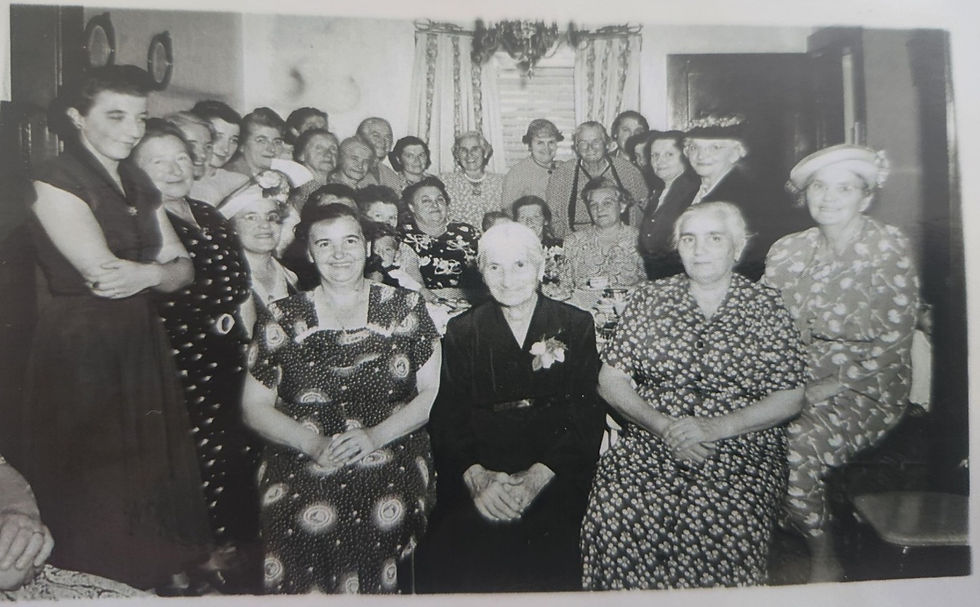
Preservation as Progress: By teaching Italian traditions to their children, these women ensured that the community did not just survive; it thrived as a distinct, vibrant cultural enclave within Calgary. The legacy of the Risorgimento heroes like Adelaide Cairoli lived on. Their society ensured that even thousands of miles away, the strength and spirit of their heritage continued to sustain and grow the community from within, along with the pressing challenges of life in Calgary.
The early Italian women were courageous to leave everything behind in Italy. Their families, climate, and all they knew to follow their husbands to a new world. Some travelled with their husbands and children. Often though the wives were left behind until their husbands found steady work, a house and sent the money to come over. Travelling with small children and babies, across the Atlantic by boat (often having to battle seasickness )then navigating the train stations where you couldn’t understand the language would test their courage and resilience. In one story, Maria recalled how she didn’t realize that she had to change trains at Montreal and she missed the train to Calgary, she received help from a stranger who took her and her children to where the train would depart -but not till the next day. The stranger bought them some food, and they spent the night at the train station. Often, other travellers and local citizens would assist the women and children. They would be exhausted after the 5 day train ride and then having to make a home.
Can you imagine making the trip in those early years with children and babies by yourself or travelling to marry someone you didn’t even know!
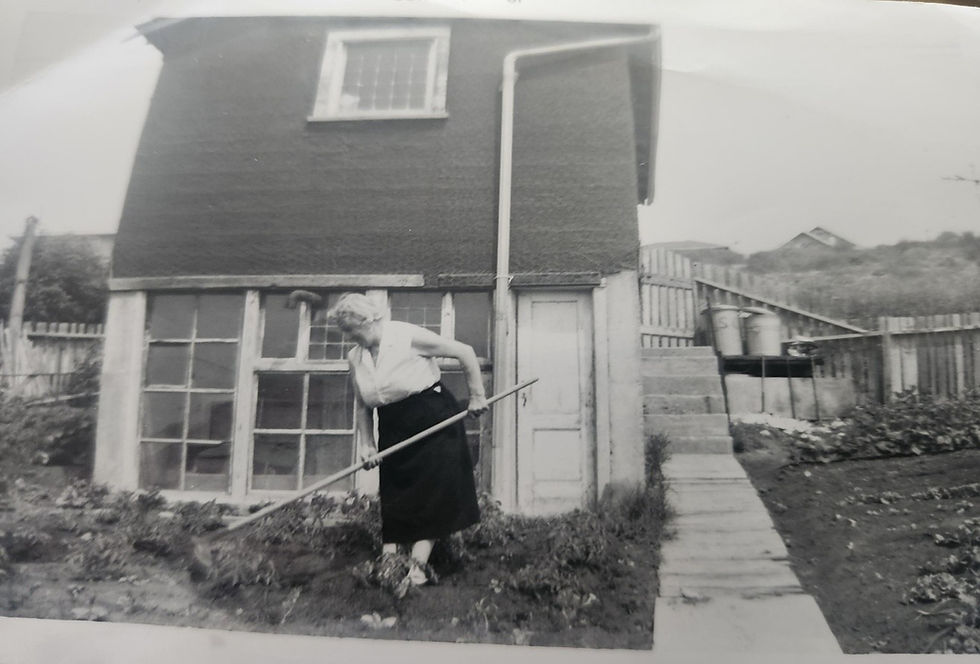
Women were the backbone of the family, they were the ones who washed, cleaned, made clothes, had food on the table, get the children off to school. They would plant gardens to grow whatever would grow, experimenting with Calgary’s climate.
Often many planting in empty lots, growing enough to last the winter to feed their families.
During the tomato harvest, the air was filled with the rich aromas of simmering pasta sauce. Every Italian women had a secret ingredient for making sauce which sometimes they shared!! Pasta was always homemade.
They worked together to harvest the gardens and preserve enough for the winter, sharing among friends and neighbours. In those difficult years of the Depression, these gardens became a true necessity.
Some would pick up extra money by taking in boarders, washing clothes for others. One mother recalled that she had been in Calgary for a couple of months when a neighbour asked if she would like to kill chickens for ten cents each. Despite the language barrier, she agreed. On some days, she killed as many as 100 chickens, proud to contribute extra income to her family. Others found work at the Palliser Hotel in the laundry, Hudson Bay hired many as seamstresses for their clothing and fur departments.
Adjusting to a new country while raising children, supporting their households, and holding onto traditions from home. One of the most important ways they did this was by gathering together — often in each other’s homes.
These early meetings were informal and welcoming. Women would visit one another to talk, laugh, and offer support. For many, these gatherings were a lifeline. Life could be isolating, especially with language barriers and long hours worked by their spouses. Sitting around kitchen tables or living rooms, the women shared advice, stories, and encouragement.
Sewing, crocheting, and other handwork were a big part of these get‑togethers. As they worked, they exchanged skills learned in Italy and made clothing or household items for their families. These moments allowed traditions to be passed down while also helping meet every day needs.
While their work often centred on home and family, some Italian women were also involved in wider community issues. The women’s branch of Political Parties were also hosted at their homes becoming involved in political movements, labour concerns, and local matters were often discussed during these gatherings. Though their involvement was not always public or formally recorded, their influence was felt within families and community networks.
Over time, these informal home meetings grew into something more organized. In 1927, the informal women’s group became an organization named after Adelaide Cairoli, which was a well‑known historical figure in Italy. Naming the organization after her reflected the values these women admired.
The newly formal organization held its first meeting on Sunday, July 24, 1927, which was held at the Giovanni Caboto Loggia hall. The core principals were from FloiriD’Italia with acceptance from the grand lodge in Fernie BC. The first elections were held
and officers elected were, President Mrs. G Santopinto, Vice-president Mrs. T Grassi, correspondent Mrs. G Romeo, Secretary Mrs. J Taverna, treasurer Mrs. L Ferrari, Oratrice Mrs. M Aiellio, and Mrs. Edith Dipalo, finance committee Mrs. A Signori, Mrs A Carloni, Reception committee Mrs. A Aquillini, Mrs L Mattia, Mrs. S Cuiffa.
In Calgary’s Italian community, women were central to its social and cultural life, especially through organizing and hosting events that brought people together. They arranged fundraisers, teas, bazaars, and raffles that supported families, CWL and school groups, and community needs, while also creating important spaces for connection.
They were equally active in marking life’s milestones. Funeral luncheons were carefully prepared to support grieving families, while honouring 25th and 50th wedding anniversaries were celebrated with large gatherings. Bridal showers, often held in homes, were elaborate events filled with food, music, and gifts, drawing together much of the community. They were there to support each other in sickness and deaths. These events strengthened bonds between families and helped younger generations feel connected to their heritage.
Weddings, too, became community-wide occasions, where extended families and friends gathered in large numbers. These traditions reflect the early pattern of social life among Italian immigrants in Calgary. Eventually their daughters became members.
The traditions of the “ Big Italian Wedding, Bridal Showers, First Communion Celebrations ” started here and have lasted generations. Many of us can remember our own or attended weddings, showers, any kind of celebration where everyone was invited. The gathering of zia’s and numerous cousins in a basement kitchen making the special pastries and desserts.
The Adelaide Cairoli Association stands as a testament to the quiet, persistent, and essential work of the women who built Calgary’s Italian community. They did not simply mirror the past; they repurposed the ideals of an Italian heroine to solve the practical, pressing challenges of life in Alberta. Their society ensured that even thousands of miles away, the strength and spirit of their heritage continued to sustain and grow the community from within. The Adelaide Cairoli lasted for many years there is a record of meetings still taking place at The Isle of Capri in 1954 with Jenny Taverna listed as the presider. Eventually it merged into The Calgary Italian Club, where the women still organized cooking, teas, fundraising which was now done at “The Club” or OLPH church hall.
The Adelaide Cairoli Association functioned as the "community heartbeat."
A list of some of the members
Aiellio Aquilini Bombardieri Buccini Campanelli Carloni Ciccioni Cioni Ciuffa Corradetti DeSantis DiPaolo Dipalo Ferrari Fornazero Forzani Gallelli Galardi Gasbari Garossino Grassi Ioffola Manzara Mattia Morelli Rebaudengo Romeo Rosso Santopinto Santucci Serani Signori Taverna Vietto Violini Vignola
The list grew over the years and many families had sisters, daughters, They ruled with fierce devotion, but also with strict discipline and very clear expectations of how children should behave. Respect wasn’t optional—it was taught, reinforced, and, if necessary… delivered on the spot.
Some of the “methods” used to achieve proper behaviour have been passed down for generations—and every Italian kid remembers them well:
• “La cucchiaio sul culo!” (the wooden spoon to your bum!!!) — a classic, feared across kitchens everywhere.
• If the spoon wasn’t nearby? No problem… a shoe, slipper, or whatever was within reach would fly through the air with surprising accuracy.
• Tried to escape and hide under the bed? Think again. Out came the broom to finish the job—no safe zones in an Italian household!
• “Vieni qua—come here now!” — and you knew you’d better move immediately.
• “Perché? Perché l’ho detto io!” — Why? Because I said so. No appeals allowed.
• “Non fare il furbo!” — Don’t get smart with me.
• “Guarda che ti vedo!” — Don’t think I don’t see you, even when her back was turned!
• “Conta fino a tre…” — I’m counting to three… though somehow you never wanted to find out what happened at three.
• “Se tuo padre torna a casa…” — just wait until your father gets home…
• Being called “Cattivo” or “Cattiva” —
• And of course, the legendary warning: “Attento… il malocchio!” 👁 — the evil eye meant that were not impressed with whatever was going on
• “Mangia Mangia” no matter how much you ate already
• The sign of the cross was made often for many different reasons
And yet, somehow, through all of this chaos, discipline, and flying footwear, there was always an unmistakable warmth. Meals were full, laughter was loud, and love was never in question — especially when you heard “Mangia! Mangia!”, whether you were hungry or not.
Recipes were never written down. Non esisteva niente su carta.
If you wanted to learn, you stood beside them in the kitchen — watching, helping, and listening carefully. “Guarda… così,” they would say — watch… like this. A handful of flour, a pinch of salt, “quanto basta” — just enough. No measurements, no timers, no shortcuts.
Traditional favourites like frappe, cookies, and breads (especially Easter Bread) weren’t taught—they were passed down, one generation to the next, through memory and hands-on learning. You learned by doing, by tasting, by being there, side by side, covered in flour and stories.
Because in an Italian home, cooking wasn’t just about food — it was famiglia, it was tradizione, it was amore.